


Hard Shell Rooftop Tent Buying Guide
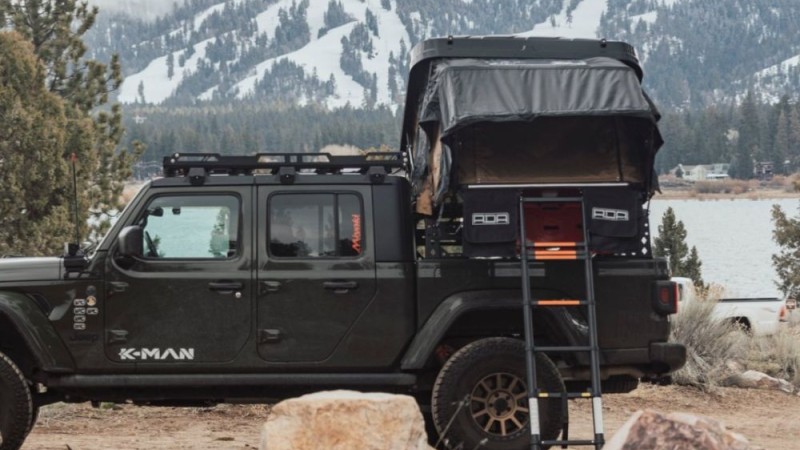
For overlanders and road-trip enthusiasts, a rooftop tent has long been a familiar companion. But as hard shell designs increasingly dominate the market, choosing the right one has become more complex than ever. Shell material, opening system performance, and dynamic load capacity are the three pillars that decide whether your investment delivers years of reliable service or becomes a costly disappointment. Here is what you need to know.
Hard Shell Rooftop Tent Shell Material Breakdown
The outer shell is the first line of defence and the largest cost driver in any hard shell rooftop tent. Two material families dominate the market: high-strength ABS composite and aluminium-magnesium alloy. Premium ABS shells incorporate sufficient UV stabilisers to retain structural toughness even after years of sun exposure, resisting gravel strikes without denting and withstanding torrential rain without compromise. Aluminium-magnesium variants, with their superior rigidity, maintain minimal aerodynamic deformation under crosswinds and high-speed driving. Once the wall thickness reaches 1.8 millimetres or above, the roof panel produces no structural resonance even on continuously uneven terrain. For most users, ABS offers the better balance of cost and impact absorption, while aluminium alloy appeals to serious off-roaders prioritising rigidity and weight savings. Either way, always verify the wall thickness and UV protection grade before committing.
Rooftop Tent Gas Struts and Hinge System
Setup efficiency is the most tangible advantage of hard shell over soft shell designs, and this advantage rests entirely on the gas struts and hinge assemblies. Premium gas struts maintain stable lifting force across a wide temperature range, from minus forty degrees to plus eighty degrees Celsius, ensuring smooth operation even in freezing conditions. Hinge pins crafted from stainless steel or chromoly alloy maintain precise clearances after thousands of durability cycles, with no deviation or binding. When evaluating options, ask the supplier about the strut brand and its certified operating temperature range. German brands such as Stabilus are known for superior cold-weather reliability. The value of this system is simple: after a long day behind the wheel, you no longer need to expend extra energy on complicated setup routines. The interval between parking and settling in is shortened to a practically negligible span.
Hard Shell Rooftop Tent Dynamic Load Explained
Many buyers are drawn to impressive static weight ratings, but the figure that truly matters for on-road safety is dynamic load capacity. Quality hard shell rooftop tents feature one-piece continuous crossbars at the base, distributing impact forces evenly across the roof rack system. Even on violently undulating trails, the connection between tent and vehicle remains firmly intact. The dynamic safety margin typically reaches about one-third of the static rating, with premium products capable of withstanding dynamic impacts several times their own weight. Under hard acceleration, emergency braking, or cornering, the tent shows no tendency to shift. Always cross-check the dynamic load specification on the product datasheet against your vehicle's certified roof capacity. This step is not optional—it is fundamental to safe travel.
Rooftop Tent Installation and Vehicle Compatibility
A considerable number of users discover compatibility issues only after purchase. The first parameter to verify is your vehicle's dynamic roof load limit, typically found in the owner's manual or on a label inside the driver's door frame. Most crossover SUVs have a dynamic limit between fifty and seventy-five kilograms, while a standard two-person hard shell rooftop tent weighs around sixty-five kilograms. Add crossbars and mounting hardware, and you are approaching the ceiling. For this reason, lightweight hard shell rooftop tents are particularly critical for SUV owners. The second consideration is crossbar selection—different roof rail shapes require specific mounting clamps. OEM crossbars or rigorously tested aftermarket options are always preferable. After installation, check bolt torque every five hundred kilometres, and perform extra inspections after rough off-road sections.
Hard Shell Rooftop Tent Soft Shell Comparison
The comparison between hard shell rooftop tents and soft shell alternatives is one of the most frequently searched queries among new buyers. Soft shell tents are more affordable and compact when folded, but their fabric construction inherently limits waterproofing, noise insulation, and wind resistance. Hard shell rooftop tents demand a higher upfront investment, yet they deliver superior convenience, four-season usability, and long-term durability. Consider setup time alone: a soft shell requires fifteen to twenty minutes even for experienced users, while a hard shell rooftop tent opens and closes in under one minute. If you camp more than five times a year across spring, autumn, and winter, the upgrade to a hard shell is fully justified.
Rooftop Tent Four Season Use and Waterproof Sealing
The true value of a hard shell rooftop tent emerges in winter and wet conditions. During cold-weather camping, soft shell interiors commonly develop condensation where breath moisture meets cold fabric, and sleeping bags touching damp walls lose their insulation. Hard shells with insulated inner liners effectively block thermal bridging, keeping internal temperatures more stable. On the waterproofing front, quality hard shell rooftop tents feature top drainage channels sloping outward on both sides, working with high-grade rubber seals to redirect rainwater away from hinge seams. When evaluating seals, ask about the material—EPDM rubber offers superior weather resistance and elasticity retention compared to standard PVC, making it a more dependable choice for long-term ownership.
Rooftop Tent Maintenance and Care Recommendations
Like all outdoor gear, regular maintenance extends the service life of your hard shell rooftop tent. After each major trip, wipe the rubber seals with a damp cloth to remove accumulated grit that could wear down sealing surfaces during repeated open-close cycles. Apply rust-preventive lubricant to hinge pins twice a year—chain oil or silicone-based lubricants work well, but avoid WD-40 as it dissolves factory grease and leaves hinges dry. Before winter storage, open the tent on a sunny day to air it out completely, ensuring internal moisture evaporates before closing to prevent mould growth. If gas struts lose lifting force over time, replacement is straightforward—simply order identical spec struts from the manufacturer and swap them out. This is considered normal consumable replacement, not a structural failure.
A hard shell rooftop tent is more than a piece of equipment. It represents a deliberate choice about the quality of your travel experience. From material selection to installation, from routine maintenance to all-season use, every detail deserves attention. When you park in the open landscape, deploy your tent in under a minute, and settle into a sturdy shelter with the wind passing by outside, you will understand why the right product is worth the investment. With it, every departure becomes a little more assured.