


Tesla Car Camping Setup EV Rooftop Tent
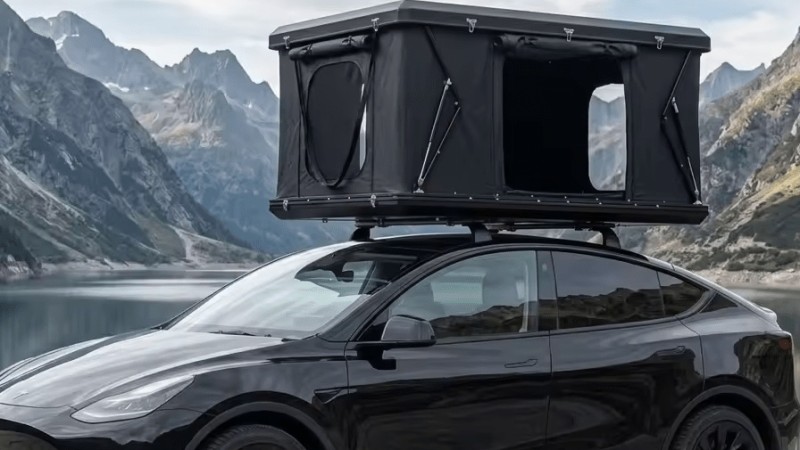
The camping enthusiasm among Tesla owners has been rising steadily year after year. Camp mode, climate-controlled cabin, whisper-quiet parked environment, and that expansive glass roof essentially make a Tesla a mobile living space designed for the outdoors. Yet when traveling with more than two people or carrying a full load of gear, the interior space quickly becomes a constraint. Once the trunk is packed with sleeping bags and cooking equipment, folding down the rear seats no longer provides a genuinely comfortable sleeping position. This is why an increasing number of Tesla owners are looking upward. The combination of an electric vehicle and a rooftop tent is redefining the modern camping experience.
Tesla Rooftop Tent
A Tesla rooftop tent is far more than a generic product with a label slapped on. It incorporates specific design considerations tailored to Tesla vehicles. Every Tesla model features a full glass roof, which, while offering panoramic views, introduces unique requirements for rooftop tent installation.
The first consideration is the mounting method. Since the glass surface cannot be drilled, Tesla rooftop tents rely on the structural strength of the roof perimeter for attachment. Specially designed mounting clamps are precisely positioned so that all clamping force lands on the metal roof rails rather than the glass panel itself. Certified Tesla crossbars feature exact clamp positioning that requires no permanent modifications to the vehicle.
The second consideration is dynamic load matching. Tesla's published dynamic roof load limit serves as the baseline for selecting crossbars and tents. Tesla-specific tents undergo validation testing that accounts for the vehicle's acceleration characteristics, braking pitch angles, and cornering behavior, ensuring no relative movement occurs between the tent and the roof during aggressive driving maneuvers.
The third consideration is wind noise control. Tesla vehicles already set a high standard for cabin quietness at highway speeds, and any rooftop addition must not compromise that. Tesla-specific models incorporate rounded leading edges and rear spoiler details that effectively break up low-pressure vortices, reducing wind noise generation at speed.
Choosing a Tesla rooftop tent means selecting a complete system validated for your specific vehicle, rather than an accessory that merely attaches using universal hardware.
Model Y Rooftop Tent
Among all Tesla models, the Model Y generates the highest level of interest in rooftop tents, with search volumes far exceeding other variants. This is unsurprising. The Model Y is positioned as a sport utility vehicle with generous interior space and capable ground clearance, making it the most travel-ready Tesla in the current lineup.
One critical parameter demands special attention when selecting a Model Y rooftop tent: the dynamic roof load limit. The Model Y's official dynamic load rating is approximately seventy-five kilograms, which includes the combined weight of crossbars, mounting hardware, and the tent itself. Most two-person hard shell rooftop tents on the market weigh around sixty-five kilograms, and adding crossbars and fittings pushes the total very close to the limit. For Model Y owners, lightweight design is not merely advantageous—it is essential. Every kilogram saved translates directly into an extra margin of safety.
Beyond weight, the clearance between the tent base and the glass roof is another factor. Sufficient buffer space should be maintained between the crossbars and the tent base to prevent the base from striking the glass surface on rough roads. Quality Tesla-specific solutions include rubber buffer pads between the crossbars and the tent base, serving both to absorb vibration and to prevent metal-to-glass contact.
Model Y also benefits from a robust aftermarket ecosystem. Several brands now offer crossbar and tent combinations developed specifically for the Model Y, and some have introduced shell designs that follow the vehicle's body contours, achieving both aerodynamic efficiency and visual coherence.
For Model Y owners, a properly matched rooftop tent delivers not just additional sleeping space, but a true transformation of this crossover SUV into a fully capable camping vehicle.
Model 3 Rooftop Tent
As Tesla's highest-volume sedan, the Model 3 also supports significant camping demand. However, the sedan body style introduces considerations distinct from those of the Model Y.
The Model 3 shares the same dynamic roof load limit of approximately seventy-five kilograms. The key difference lies in the lower ride height, which means the center of gravity shifts more noticeably when a rooftop tent is installed. Model 3 users should be more mindful of speed control and cornering behavior to accommodate the higher center of gravity.
The available roof area on the Model 3 is slightly smaller than on the Model Y, requiring more precise matching of the tent base footprint to the usable roof space. Before purchasing, measure the effective span between the roof rails and cross-reference it with the tent mounting points to ensure proper weight distribution.
One often-overlooked advantage is the ease of access. The Model 3's lower height makes getting in and out of the tent easier without requiring a separate ladder. Some Model 3 owners opt for rear annex extensions that connect the tent to the trunk, creating a continuous space from the cabin to the tent for convenient gear access throughout the night.
The Model 3 rooftop tent market is smaller than the Model Y segment but is steadily growing. For sedan owners who still want the freedom to camp comfortably, a properly fitted rooftop tent offers a practical solution.
EV Rooftop Tent Range Impact
Range impact is the first question every EV owner asks when considering a rooftop tent. The answer can be quantified with reasonable precision.
Real-world testing data indicates that an aerodynamically optimized hard shell rooftop tent reduces range by approximately five to eight percent at highway speeds. For a Model Y Long Range with an actual range of roughly 450 kilometres, this translates to a loss of 22 to 36 kilometres. For most trip scenarios, this trade-off remains well within acceptable limits.
Range loss stems from two primary sources. The first is increased aerodynamic drag, regardless of shell design, any rooftop addition increases the vehicle's frontal area and drag coefficient, with losses becoming more pronounced at higher speeds. The second is additional weight, the extra mass requires more motor power to maintain the same speed, particularly during acceleration and climbing.
The most effective way to minimize range loss lies in shell shape. Streamlined hard shell designs significantly outperform boxy soft shells in drag reduction. Rounded front edges and rear spoiler details help break up turbulent airflow that would otherwise generate additional resistance.
For city driving, range loss is practically negligible since aerodynamic drag contributes little at low speeds. Only on extended highway journeys does the difference become noticeable. For weekend trips, a five to eight percent range reduction rarely affects travel plans in any meaningful way.
Hard Shell vs Soft Shell Rooftop Tent
The choice between hard shell and soft shell designs is a classic decision for every first-time rooftop tent buyer. Each type serves different use cases and priorities.
Hard shell rooftop tents offer three primary advantages. The first is protection, the rigid outer shell provides complete aerodynamic coverage at highway speeds, shielding the internal structure from gravel strikes and branch scratches. The second is convenience, with gas strut assistance, the open-close cycle takes under one minute, eliminating the need for fabric folding and strap tightening. The third is four-season capability, hard shells seal far more effectively than soft shells, performing better against winter condensation and summer downpours. For Tesla owners specifically, the low-drag characteristics directly impact range, making the hard shell the preferred choice for electric vehicles.
Soft shell rooftop tents appeal to buyers on a budget and those prioritizing compact storage volume. When folded, soft shells sit noticeably flatter than hard shells, reducing the overall height increase above the roofline. The entry price for a soft shell is typically half that of a hard shell or even lower, making it attractive for occasional campers with limited budgets. However, soft shells face structural limitations in waterproofing, sound insulation, and wind resistance. Fabric seams and zipper lines are potential leak points, and wind noise from fabric flutter at highway speeds exceeds that of any hard shell.
For Tesla applications, the hard shell's advantages are amplified further. Low-drag design directly benefits battery range, rapid deployment makes overnight stops effortless, and the rigid shell adds a protective layer above the glass roof. While a soft shell costs less, its range penalty and highway noise may carry a higher overall cost than expected on a vehicle optimized for efficiency and quietness.
If you camp more than five times per year across multiple seasons, the hard shell is the more sensible investment. For occasional summer outings on a tight budget, a soft shell can still serve adequately. For Tesla owners, however, the range friendliness and usability of a hard shell have made this choice increasingly clear.